
Native Trout in the Ghost Watershed
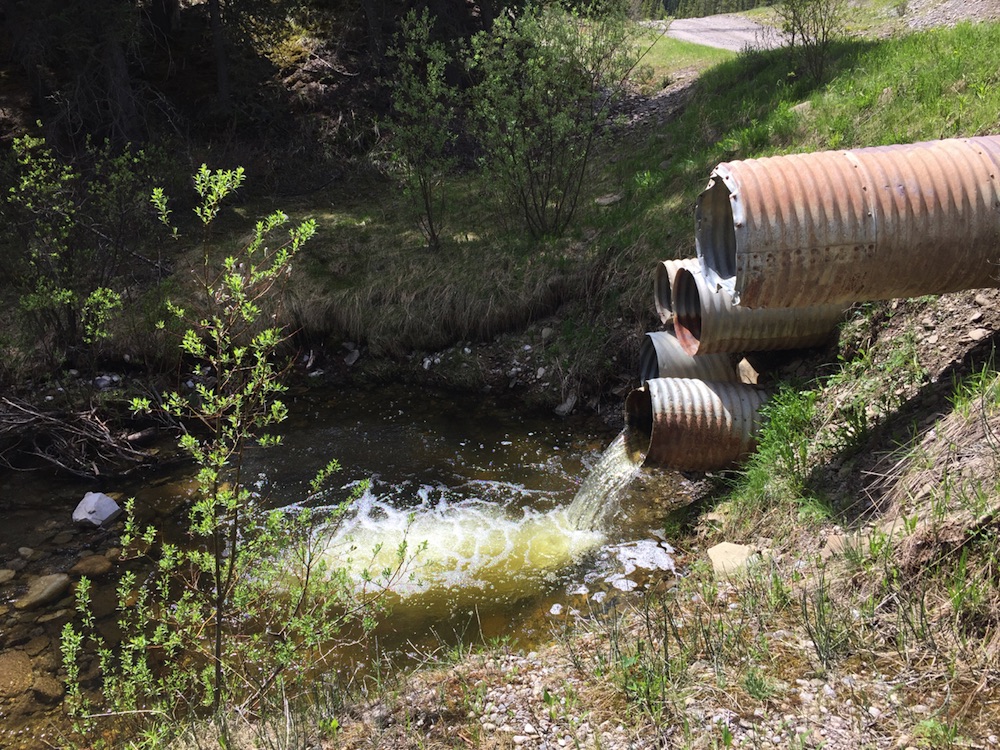
Hanging culverts on a tributray to Waiparous Creek
Photo credit: M. Krainer
Background on Native Trout
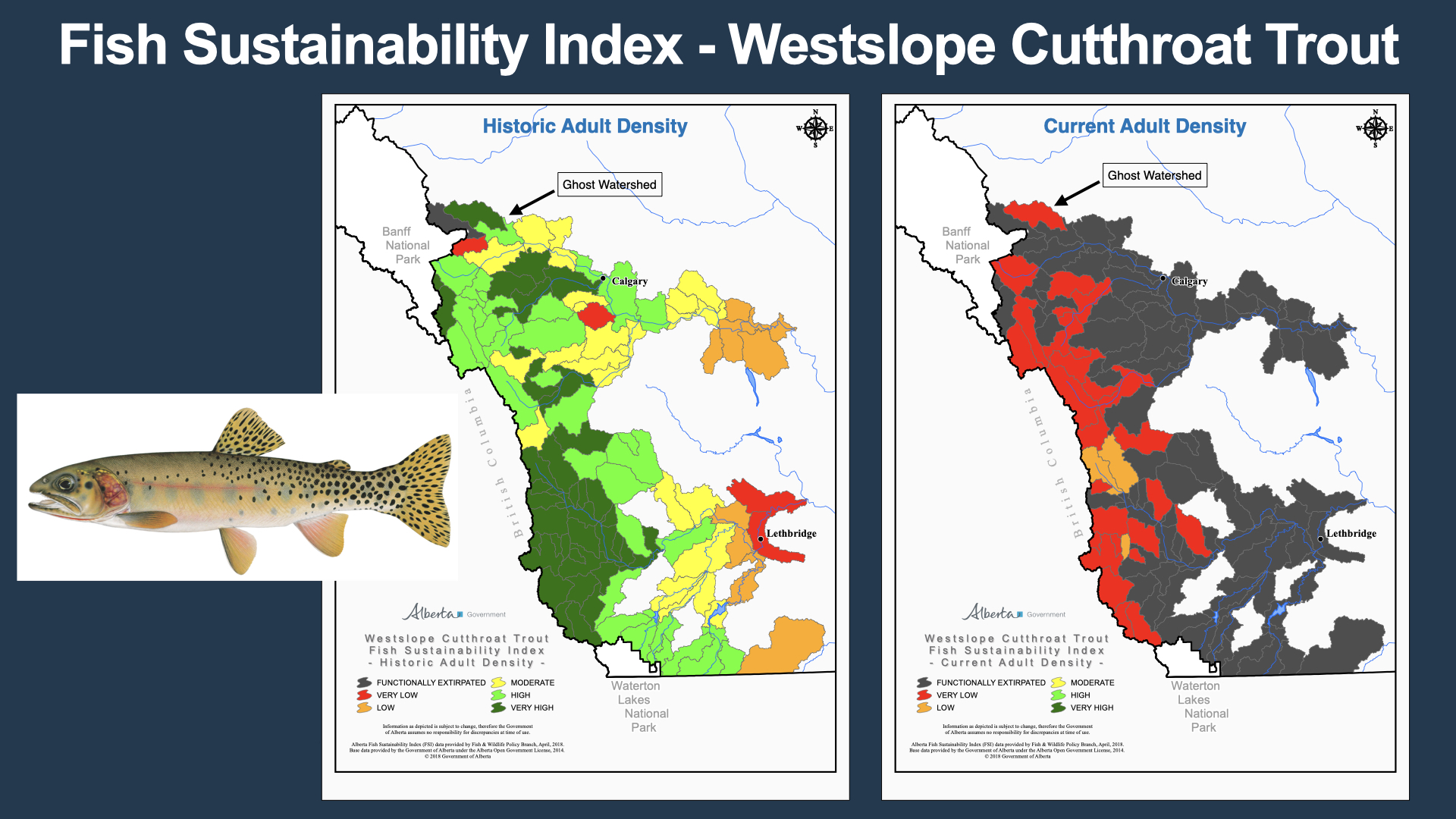
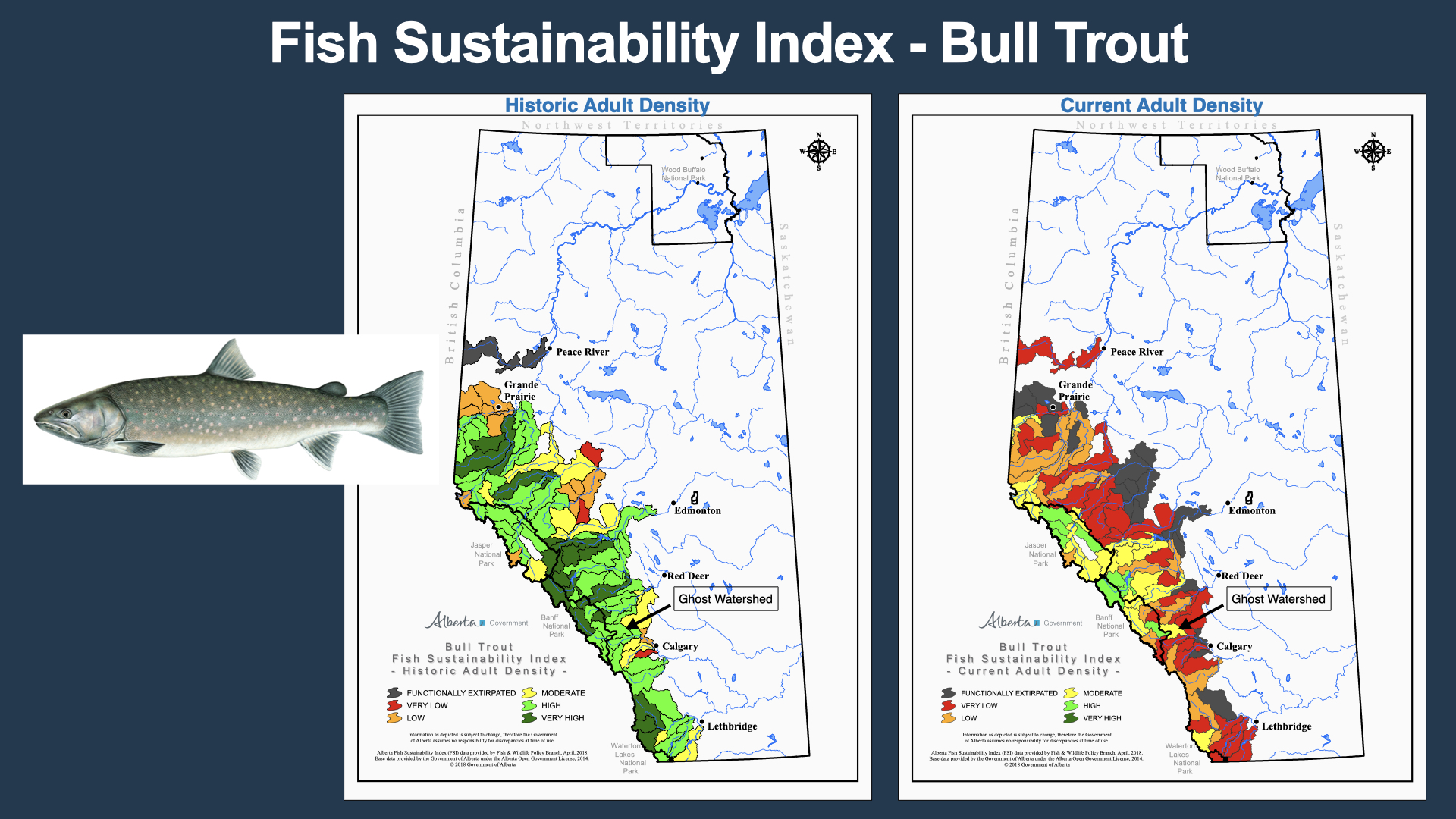
Once abundant across Alberta, the Ghost Watershed is one of the few watersheds that are still home to native westslope cutthroat and bull trout populations.
Their demise is a story of cumulative effects of land-uses affecting their habitat over the last century. This includes habitat degradation, hybridization with other non-native fish species, over-harvesting, barriers to fish movement such as hanging culverts.
The maps below show the historic and current adult density of westslope cutthroat and bull trout in Alberta.
Why are Native Trout important?
Native trout require streams that are CLEAN, COLD, CONNECTED and COMPLEX.
These are all attributes that also define a healthy watershed. Therefore, native trout are an indicator for watershed health and good water quality.
Find out more about native trout on the website of our partners Freshwater Conservation Canada and on the website of the Alberta Native Trout Collaborative.
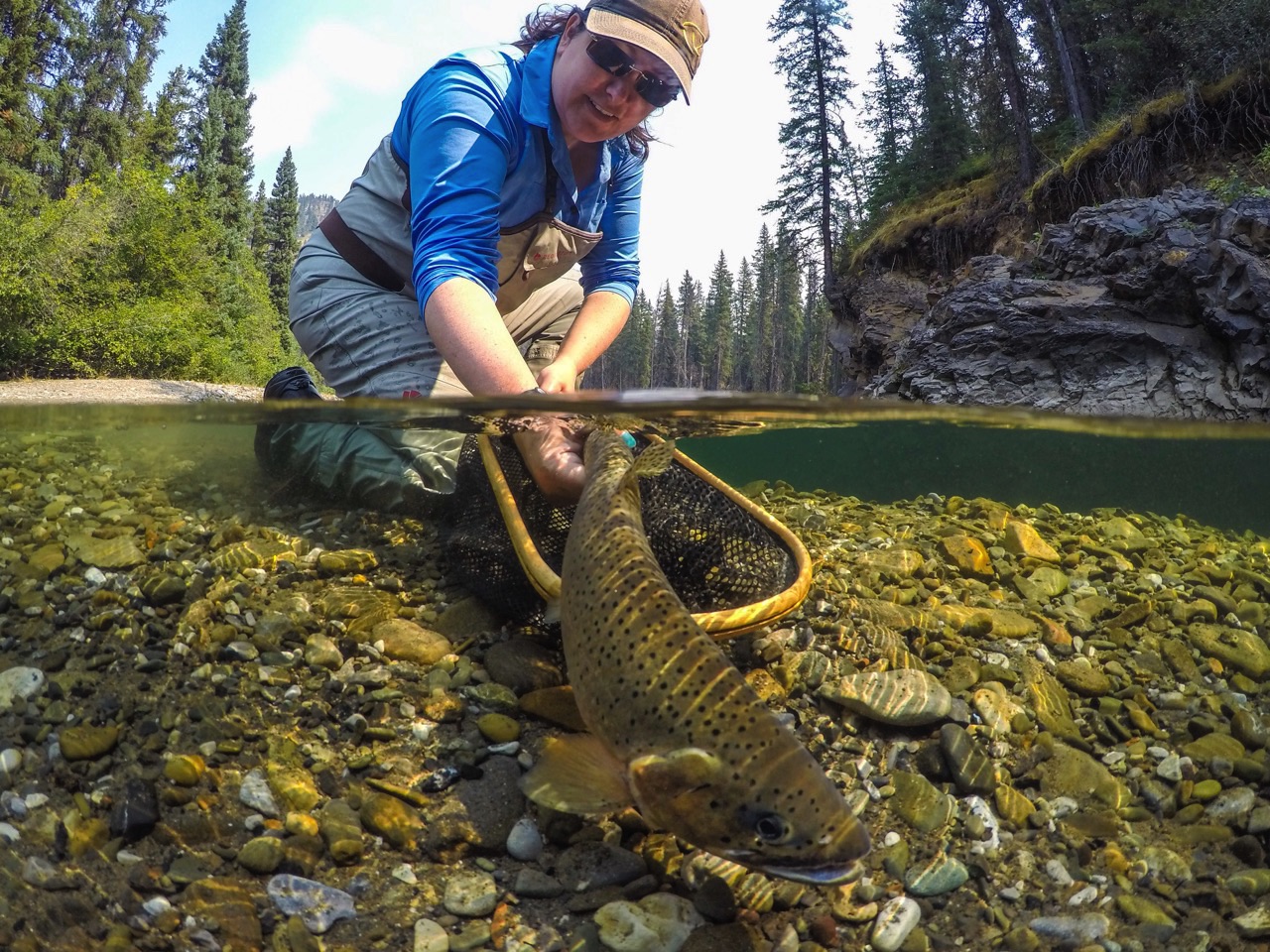
Westslope Cutthroat Trout
Photo credit: Freshwater Conservation Canada
What is good for fish is good for the watershed.
What can we do to help Native Trout?
There are many opportunities to improve fish habitat. A few examples are:
- keeping excessive amounts of sediment out of streams through careful trail design and bio-engineering techniques,
- reconnecting fish habitat by removing barriers such as hanging culverts,
- improving riparian areas that have been impacted by land-uses to restore habitat and increase shading of streams.
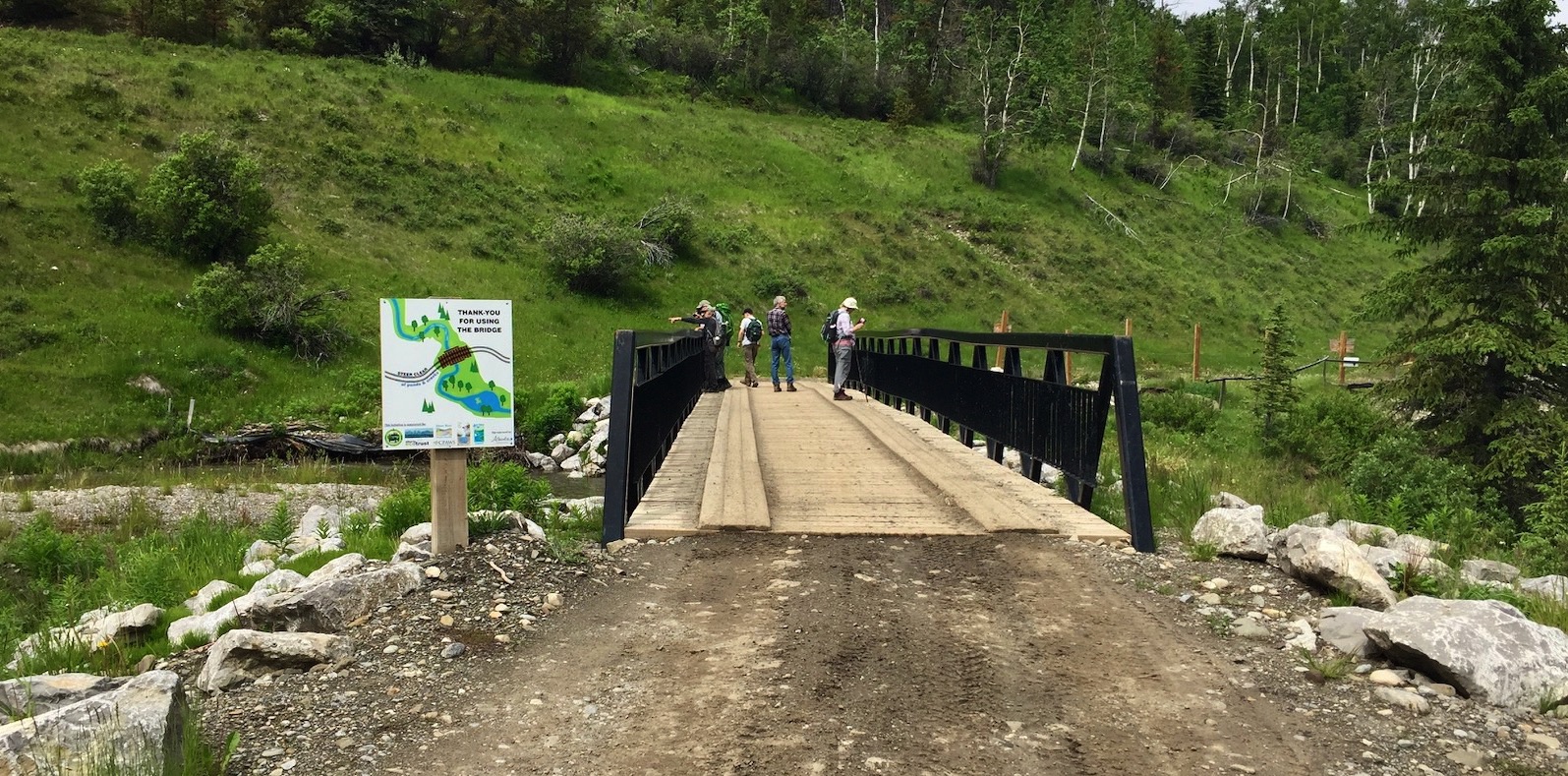
Off-highway vehicle bridge with positive approaches and bio-enginering of stream banks.
Photo credit: M. Krainer
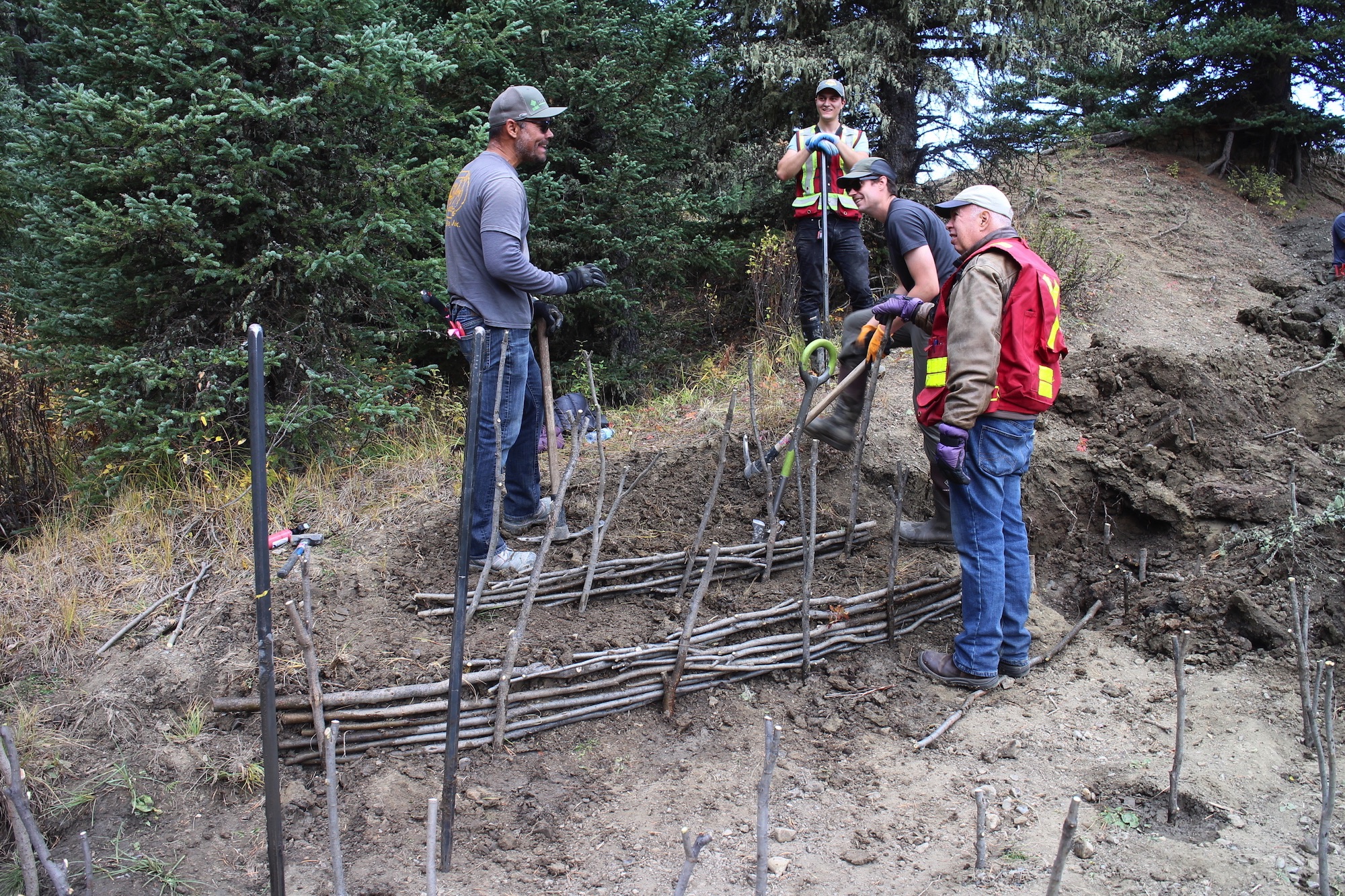
Working on a bio-engineering site with our partners.
Photo credit: K. Hull
Working together on Native Trout Recovery
GWAS is working together on native trout recovery with Freshwater Conservation Canada, Cows and Fish, the Elbow River Watershed Partnership. We also work with user groups such as the Calgary ATV Riders Association and Trails 4 Tomorrow.
This project has a 3-pronged approach that combines raising awareness about native trout, active habitat restoration and monitoring.