
GWAS Water Monitoring Program
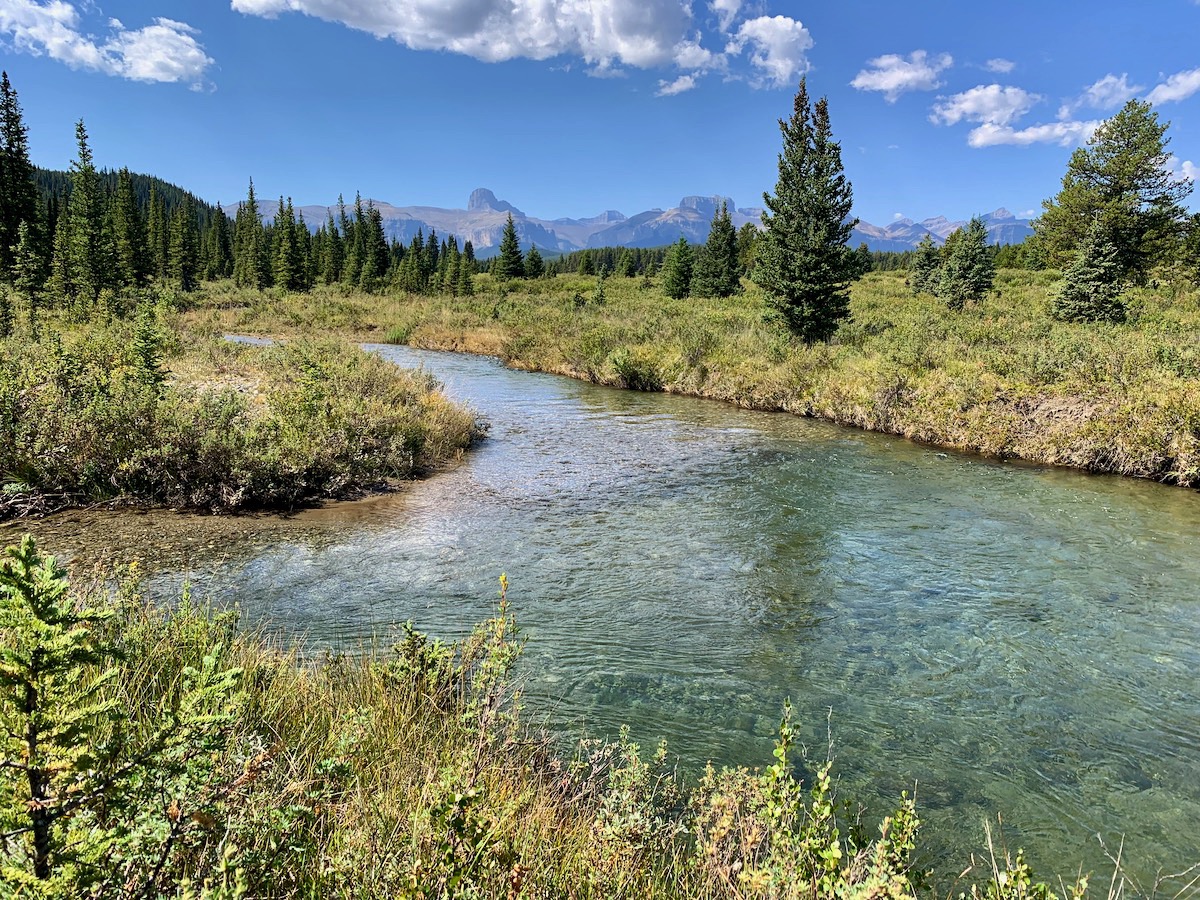
Johnson Creek - a tributary to Waiparous Creek and critical habitat for native trout.
Photo credit: M. Krainer
Background
The Ghost River State of the Watershed Report, published in 2018, identifed data gaps on water quality. The report contained the following recommendation:
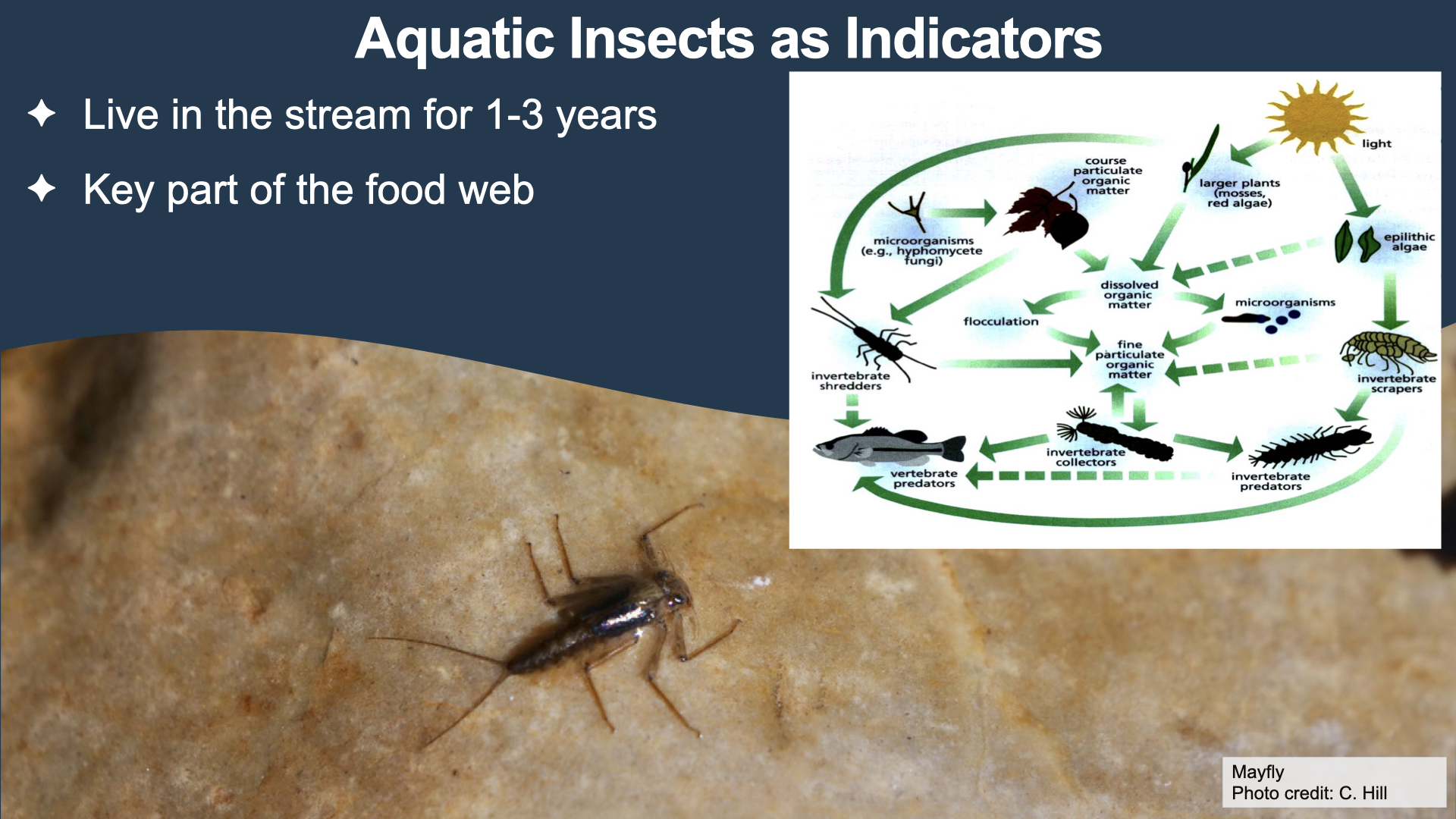
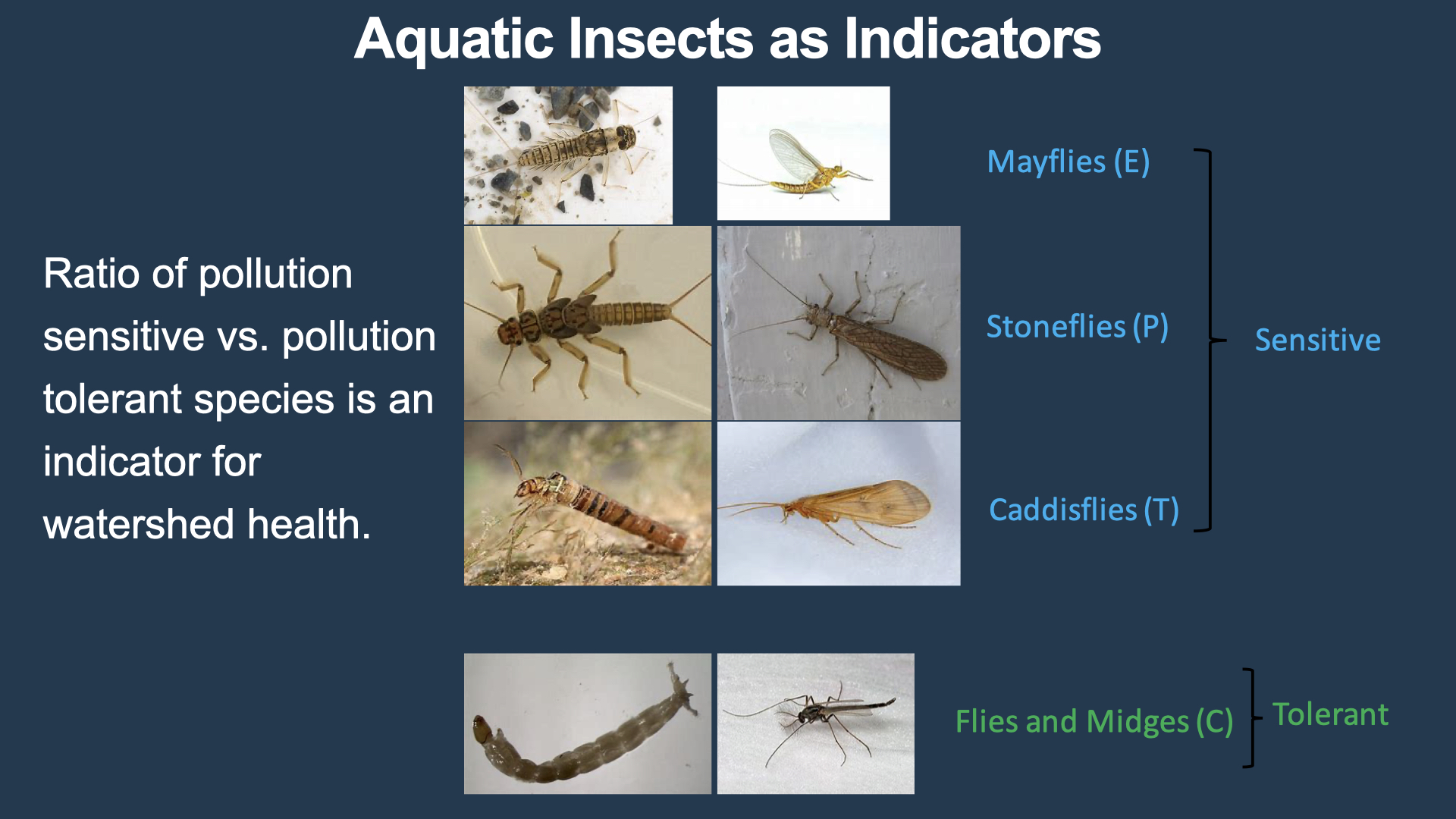
“Perform aquatic invertebrate sampling (as per the Canadian Aquatic Biomonitoring Network protocols) at sites within the Ghost Watershed, and use Ephemeroptera, Plecoptera and Trichoptera (EPT) ratios as a proxy for water quality.”
The report also recommended to collect stream temperature data as water temperature is an important parameter given that it is directly related to dissolved oxygen levels.
Components of the GWAS Water Monitoring Program
In 2020, GWAS implemented its Water Monitoring Program as an ongoing, long-term component of its work within the watershed.
The program consists of the following components:
- Sampling following the Canadian Aquatic Biomonitoring Network Protocol (CABiN),
- Collecting stream temperature data,
- CreekWatch Water Quality sampling,
- Identifying sediment point sources.
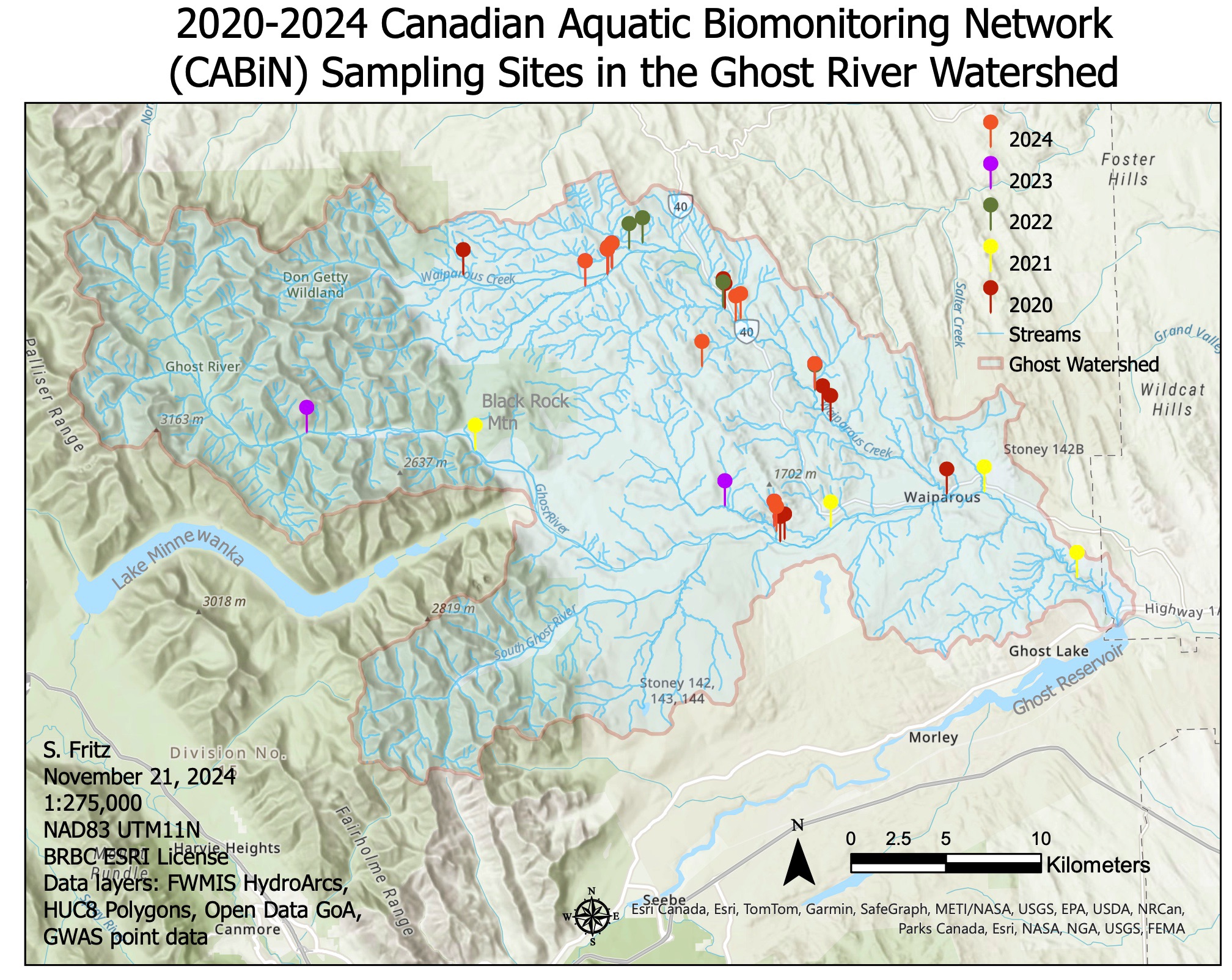
Since 2020, GWAS has collected 54 CABiN samples at 31 unique sites across the Ghost Watershed. GWAS also has collected stream temperature data at 13 sites since 2022.
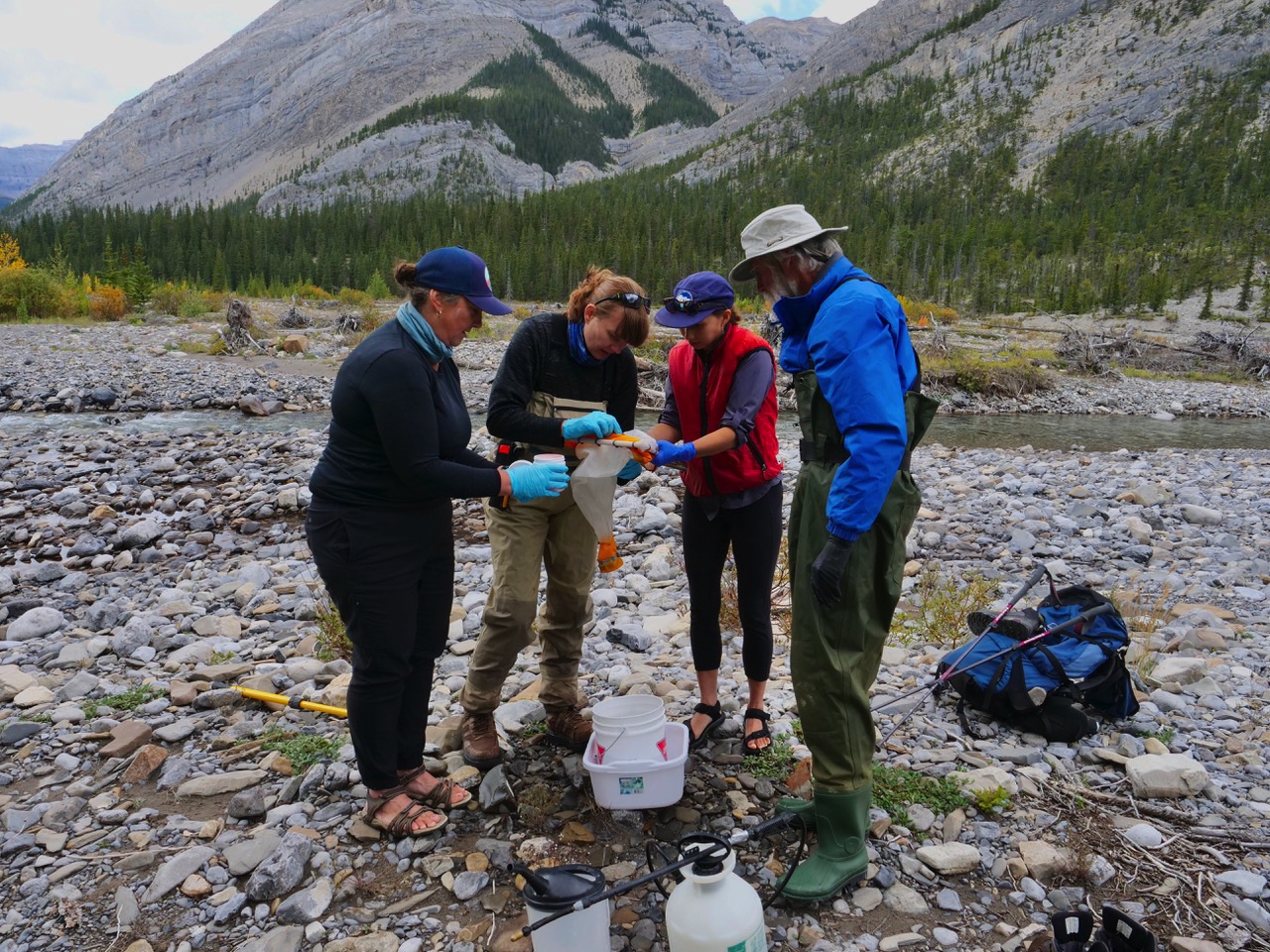
GWAS CABiN team processing the aquatic invertebrate sample.
Photo credit: C. Hill
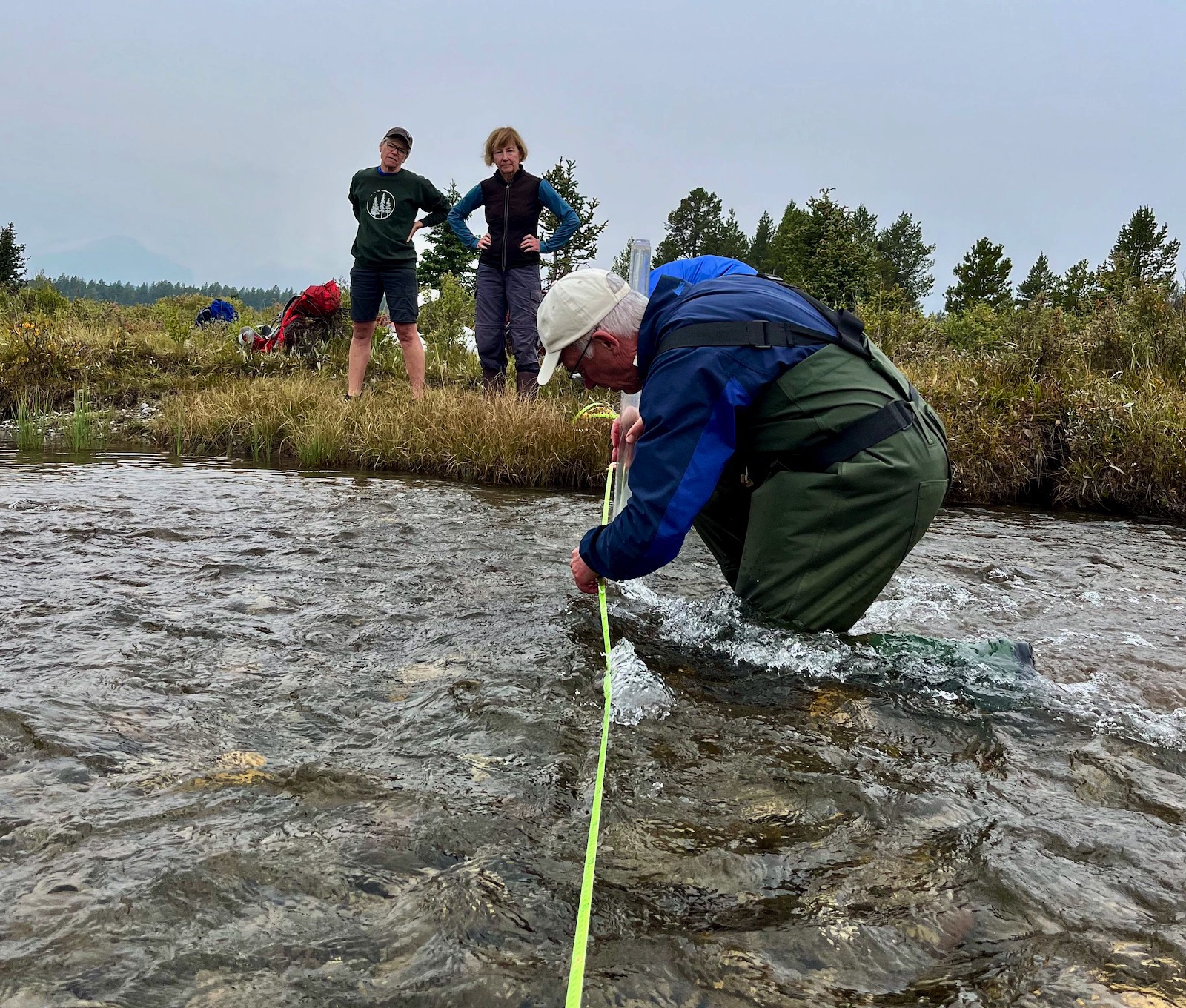
GWAS CABiN team taking flow and depth measurements of a stream.
Photo credit: E. Chong
What is CABiN?
CABiN stands for the Canadian Aquatic Biomonitoring Network protocol developed by Environment and Climate Change Canada.
CABIN provides nationally standardized protocols to monitor the health of aquatic ecosystems by sampling the organisms that live there (Link to ECCC CABiN website).
CABIN can be used by anyone interested in collecting, managing, assessing, and sharing information on aquatic ecosystem health in Canada. Many organizations use CABIN, including government, Indigenous groups, community-based monitoring groups, industry, and academia.
To join CABIN there is a training and certification program. This ensures a consistent, and scientifically rigorous approach to aquatic biomonitoring using benthic macroinvertebrates. GWAS has a team of trained volunteers undertaking CABiN sampling under the guidance of a certified CABiN Project Manager.
Reports on the CABiN sampling in the Ghost Watershed can be accessed following the link below.
How does the CABiN Protocol Work?
What is CreekWatch?
CreekWatch is a citizen science program run by the RiverWatch Institute of Alberta, a local non-profit organization. GWAS has been partnering with RiverWatch to bring this program to the Ghost Watershed since 2021.
The program engages volunteers in hands-on water monitoring using portable water quality labs. From May to October, participants conduct field assessments at designated walk-in sites, measuring key indicators such as pH, dissolved oxygen, turbidity, and nutrient levels to help answer an essential question: “How healthy are our creeks?”
The data contributes to annual reports published on World Water Day, providing insights to municipalities, conservation organizations, and water professionals.
Data Reports for the CreekWatch sampling on the Ghost River can be found following the link below.
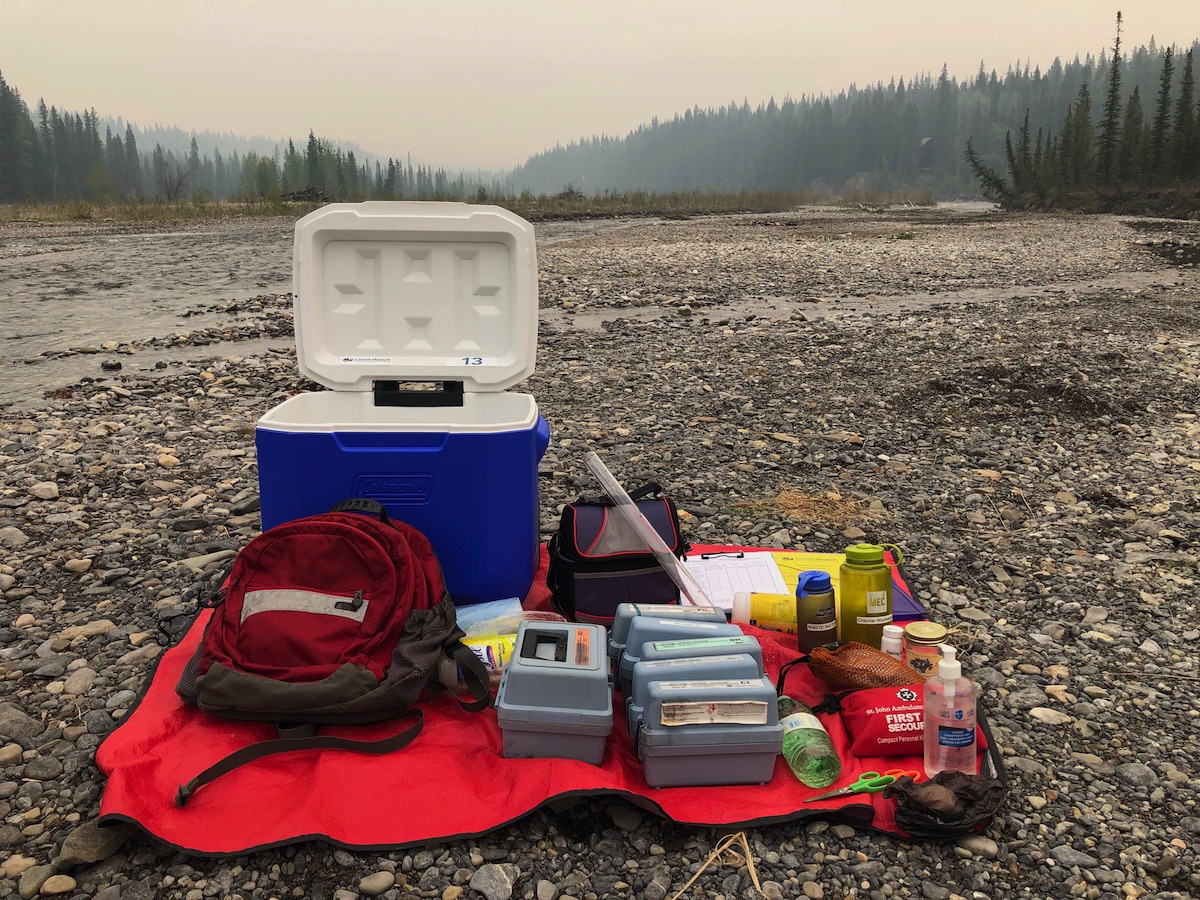
CreekWatch sampling kit.
Photo credit: S. Fritz